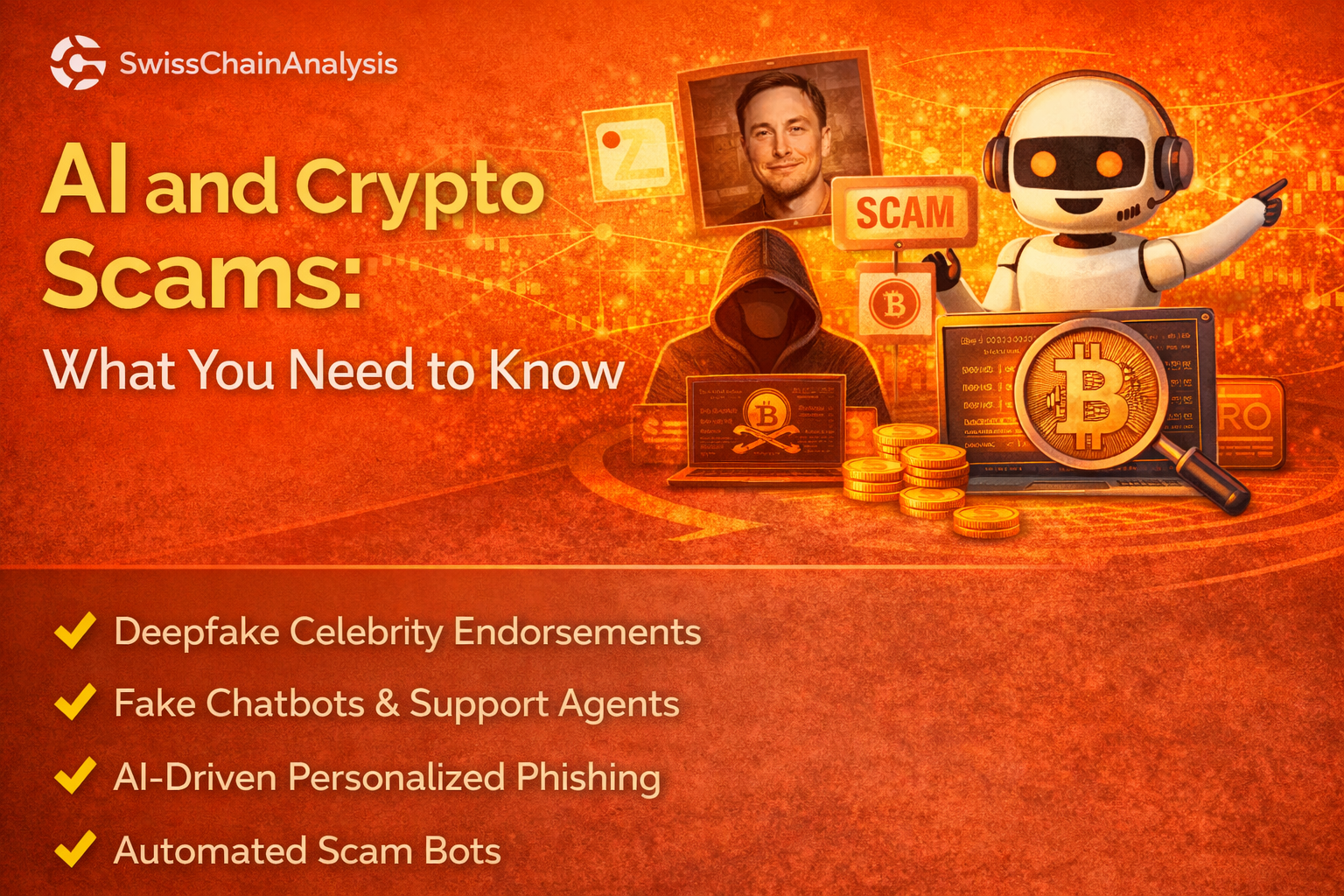
AI and Crypto Scams: What You Need to Know
Artificial intelligence is transforming the crypto world at high speed - but it is also giving scammers a powerful new advantage. What used to require time, effort, and believable human manipulation can now be automated, personalized, and scaled in ways that make fraud far more convincing than before.
In the past, many crypto scams relied on fake websites, stolen logos, hype, and aggressive sales tactics. Today, scammers are using AI to create realistic videos, imitate trusted voices, generate persuasive conversations, and tailor scam messages to specific people. The result is a new generation of fraud that is harder to detect and easier to believe.
At SwissChainAnalysis, we help individuals understand how online crypto scams work, assess suspicious activity, and review what practical next steps may be available after a loss. AI-powered fraud is one of the fastest-growing threats in this space because it blurs the line between real communication and engineered deception.
This guide explains how AI is being used in crypto scams, why these scams are especially dangerous, and what you can do to protect yourself.
AI Crypto Scams: Understanding the Digital Deception
AI has not created crypto scams - but it has made them smarter, faster, and more convincing.
Scammers can now use artificial intelligence to:
- imitate trusted public figures
- automate conversations with potential victims
- create personalized phishing messages
- generate fake testimonials and social proof
- scale scam campaigns across many platforms at once
That means fraud is no longer limited to crude messages full of obvious mistakes. In many cases, scam content now looks polished, responsive, and highly believable.
Deepfakes
One of the most visible uses of AI in fraud is the rise of deepfakes.
Deepfakes are synthetic images, audio, or video clips made to look and sound real. In the crypto space, scammers use them to imitate celebrities, founders, influencers, and trusted business figures.
Common examples include:
- fake videos of public figures endorsing a token or platform
- AI-generated interviews promoting a scam investment
- manipulated clips that appear to show someone confirming a giveaway or trading opportunity
- fake voice recordings that sound like a real person
These scams work because many people still trust what they see and hear - especially when the content appears professional and familiar.
AI Chatbots and Virtual Assistants
Scammers are also using AI-powered chat systems to engage with victims in real time.
Unlike older scam scripts, AI chatbots can now:
- answer questions instantly
- maintain long conversations
- adapt their tone to the victim
- respond to doubts more naturally
- create a false sense of trust and professionalism
In crypto scams, these systems may be used as:
- fake support agents
- fake account managers
- fake investment advisors
- fake exchange representatives
- fake recovery specialists
Because the interaction feels responsive and human-like, victims may not realize they are being manipulated by an automated system.
Personalized Phishing Attacks
Traditional phishing already relies on urgency and deception. AI makes it far more targeted.
Scammers can use AI to analyze:
- social media activity
- public posts and comments
- professional background
- crypto interests
- previous scam vulnerabilities
- online behavior patterns
Using that information, they can create messages that feel unusually relevant to the target.
Examples may include:
- a phishing email referencing a wallet you actually use
- a fake message about a token or exchange you recently mentioned online
- a fraudulent recovery offer tied to a loss you previously discussed
- a fake investor or partner message tailored to your interests
The more specific the message feels, the more likely it is to bypass suspicion.
AI-Driven Social Engineering
Social engineering is the art of manipulating people into trusting the wrong person or taking the wrong action. AI gives scammers better tools to do exactly that.
They can use AI to:
- test which messaging style gets the best response
- identify emotional triggers such as urgency, fear, greed, or hope
- generate convincing replies on demand
- create multiple fake identities quickly
- keep scam conversations going for longer without much effort
This makes manipulation more precise. Instead of sending the same scam to everyone, fraudsters can create many versions designed for different personalities and vulnerabilities.
Automated Scam Bots
AI also allows scammers to scale operations far beyond one-on-one fraud.
Automated scam bots can be used to:
- spread fake investment promotions
- flood platforms with fake comments and reviews
- send mass direct messages
- imitate community engagement
- make a project look more trusted or more popular than it is
In crypto, perceived legitimacy matters a lot. If a token, platform, or opportunity seems widely discussed and positively reviewed, people are more likely to trust it. AI helps scammers manufacture that appearance at scale.
Why AI Crypto Scams Are So Dangerous
AI crypto scams are dangerous not only because they look real, but because they attack trust itself.
Here is what makes them especially effective:
- They are more convincing - Deepfakes, polished messaging, and fast AI responses can make scams look highly legitimate.
- They scale easily - One scam operation can reach thousands of people at once across email, messaging apps, websites, and social media.
- They reduce obvious warning signs - Poor grammar, repetitive wording, and slow responses used to expose many scams. AI removes a lot of that friction.
- They manipulate social proof - Fake reviews, fake accounts, fake conversations, and fake community activity can all be generated to create artificial trust.
- They exploit speed - In crypto, decisions are often made quickly. AI-powered scams are designed to move just as fast.
The result is a more dangerous environment where fraud can feel less like a scam and more like a legitimate opportunity.
Keeping Your Crypto Safe in the Age of AI
As AI-driven scams become more sophisticated, the best defense is a mix of caution, verification, and strong digital security habits.
Do Not Believe Everything You See or Hear
This is now one of the most important rules in crypto.
A video, screenshot, voice message, testimonial, or social post is no longer reliable just because it looks real. Always assume that visual or audio content could be manipulated.
Be cautious when you see:
- celebrity endorsements
- urgent investment recommendations
- giveaway videos
- "official" voice or video messages
- emotional appeals connected to crypto opportunities
If something feels designed to push you into acting fast, pause before doing anything.
Double-Check Before You Click
Before clicking links, connecting a wallet, sending crypto, or sharing information, verify independently.
Good habits include:
- checking official domains carefully
- confirming announcements through multiple trusted sources
- avoiding links from direct messages or unknown accounts
- verifying support contacts through official websites
- checking whether a project has credible independent coverage
Scammers want you to react before you verify.
Use Strong Security Measures
Even when a scam begins with social engineering, strong account security can reduce the damage.
Important steps include:
- strong, unique passwords
- two-factor authentication on exchange and email accounts
- updated devices and browsers
- reputable anti-malware protection
- careful review of login alerts and account activity
If your email or exchange account is compromised, the consequences can move quickly.
Trust Your Instincts
When something feels off, do not ignore it.
Common warning signs include:
- pressure to act immediately
- promises of quick profits
- highly polished but vague explanations
- fake urgency around wallet verification or account recovery
- people who avoid clear answers but keep pushing you forward
- opportunities that seem designed to trigger FOMO
It is better to miss a supposed opportunity than to walk into a scam.
Red Flags of an AI Crypto Scam
While the tools have changed, many core warning signs remain the same.
Watch for:
- guaranteed profits or low-risk promises
- celebrity endorsements that cannot be verified
- direct messages from unknown "advisors" or "support teams"
- fake urgency around token launches, wallet issues, or recovery offers
- polished content with no transparent company structure behind it
- unusual requests for wallet connection, seed phrases, or private information
- platforms that seem active and trusted but offer little real transparency
AI can improve the presentation, but the scam logic is usually still there.
What to Do If You Think You Were Targeted
If you suspect you were approached by an AI-powered crypto scam, act quickly.
Recommended first steps:
- stop communication with the suspicious party
- do not send more funds
- save screenshots, messages, wallet addresses, URLs, and transaction records
- secure your email, exchange, and wallet-related accounts
- change passwords and enable stronger security where needed
- document exactly what happened
- seek professional guidance if funds were lost or access may have been compromised
Fast action can help preserve evidence and reduce further damage.
How SwissChainAnalysis Can Help
At SwissChainAnalysis, we help clients review suspicious crypto situations, assess scam behavior, and understand whether an incident fits a broader fraud pattern.
Depending on the case, this may include:
- reviewing how the scam was presented
- analyzing wallet addresses and transaction flow
- identifying common fraud indicators
- helping organize evidence
- explaining what recovery or reporting options may realistically exist
Our goal is to provide clarity and practical guidance in situations where the line between real opportunity and engineered deception has become difficult to see.
Final Thoughts
Artificial intelligence is changing the crypto scam landscape in a major way. What once looked amateur can now look polished. What once felt suspicious can now feel credible. And what once targeted a few people can now be scaled to thousands.
That is why awareness matters more than ever.
The best protection is not panic - it is verification, skepticism, and strong security habits. And if you have already been targeted by a suspicious crypto scheme, fake endorsement, fraudulent support message, or AI-powered investment scam, SwissChainAnalysis can help you assess the situation and understand your next steps.
